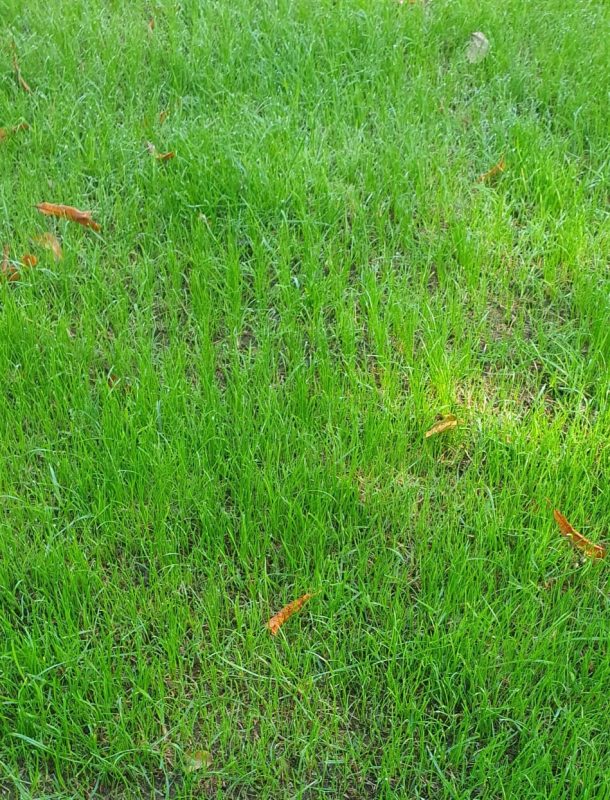
Brown, patchy lawn after the summer? Here’s what we’d recommend
Most patchy lawns need the same thing. The thatch underneath needs removing and new grass needs putting back into the gaps. Here are your options.
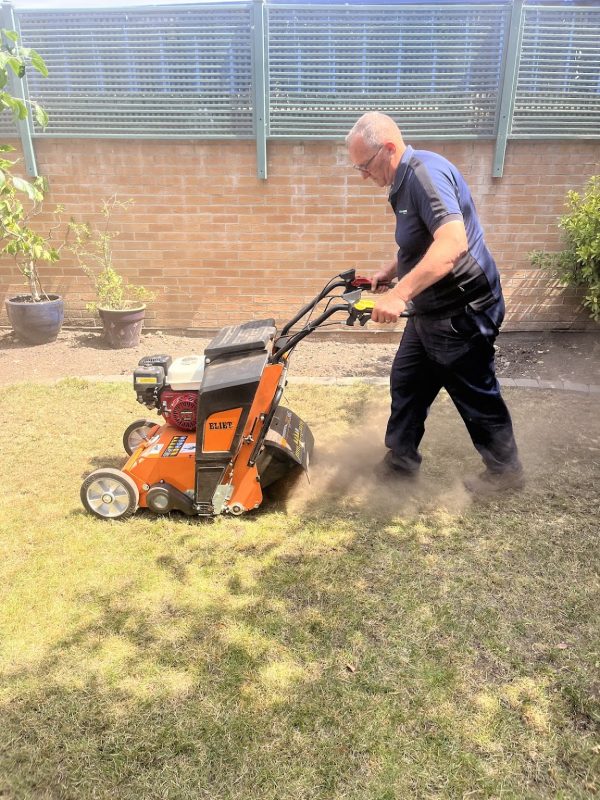
Lawn Refresh. What we’d normally recommend. Scarification to remove thatch, a complete overseed of the whole lawn and a soil improver to support germination.
Spring Germination Fleece. Recommended with Lawn Refresh in spring. A breathable fleece cover over the new seed that holds warmth and moisture and keeps the birds off.
Lawn Refresh Precision*. Our newest option. Our direct drill seeder places the seed into the soil and firms it in, so more of it germinates. The one to choose if you’re concerned about seeding and watering.
* The drill is a heavy, bulky machine, so we can’t reach every lawn with it. We’ll confirm access at your survey.
You’ll find guide prices on your estimate. Most lawns also benefit from aeration, and you can read more about that here.
Why the patches won’t fill on their own
Where grass has died, it doesn’t grow back. Over winter, moss and then weeds will move into the gaps instead.
The thinner areas usually have thatch underneath, sitting over compacted clay. Rain can’t get through to the roots, which is why some lawns stay brown long after the weather has turned. It isn’t anything you’ve done wrong. It’s the most common thing we’re seeing across Nottingham this year.
Why spring
Our autumn diary is full, and we’d rather be honest about that than seed late into cooling soil. We do keep a cancellation list, and if a date comes up while conditions are still right, we’ll offer it.
Spring works well when the winter is used properly. The rain rewets the dried out soil, and your seasonal treatments keep moss and weeds out of the bare patches. From March or April, once the soil has warmed, we scarify and seed onto cleaner ground.
Waiting until spring was never the problem. Doing nothing until then is.
Why book now
Spring fills up too. Booking now secures your date and lets us plan your winter treatments around it.
For more on how it all works, see Lawn Refresh & Recovery.
Why the seed goes in, not on
With traditional overseeding, the seed is spread across the surface. It has to find its own way into the soil, so birds take some of it and a dry week can hold the rest back.
Our direct drill seeder cuts narrow slots into the soil, places the seed at the right depth and firms it in. The seed sits in moist soil, out of reach of the birds, and more of it germinates.
The machine is heavy and bulky, so we can’t reach every lawn with it. We’ll confirm access when we see your garden.
What you’ll see, and when
For the first week or two, the lawn will look thinner than before. That’s the thatch gone, and it’s a good sign.
Seed can take up to four weeks to sprout. It’s quicker when the soil is warm and kept damp, and slower in a cold spell or without watering.
Over the following six to eight weeks, with regular watering and cutting the new grass thickens and the lawn fills out.
By summer you should have a thicker, more even lawn, better able to cope with dry weather than the one you have now.