
New Lawn or Renovate?
Create a lawn to love ...
a space to make memories
New lawn or renovate?
Most lawns that look like they need replacing dont!
Plenty of people look out at a brown, patchy lawn and quietly decide it is beyond saving.
Usually it is not. Drought, heavy use and irregular care will often thin a lawn rather than kill it. The grass plants left are often perfectly healthy, there are simply not enough of them, and moss and weeds move into the space. That is a problem you can fix, and it does not need a skip.
Will new turf sort it out?
Sometimes, but less often than people expect.
A lawn rarely fails for no reason. Compacted soil, thick thatch, poor drainage and heavy shade are what we usually find underneath. New turf is laid straight on top of that same ground, so where the cause has not been dealt with the new lawn tends to go the same way as the old one.
Turf also asks more of you than it first appears. Several weeks of consistent watering, a month or more before it takes normal use, and a seed mix you cannot see until it is down and paid for.
What we would do instead
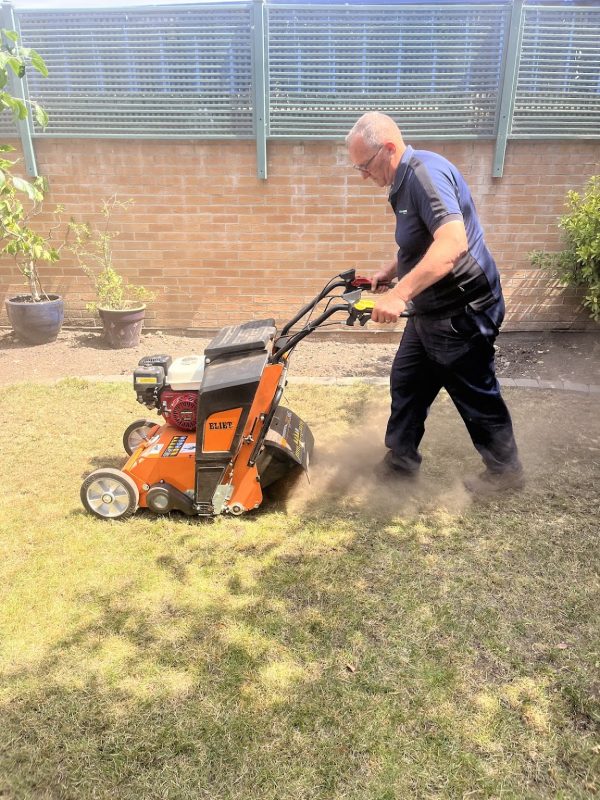
Lawn Refresh Precision Drill is a full renovation of the lawn you already have. We scarify out the thatch and creeping grasses, then direct drill new seed into the soil rather than scattering it across the top.
That detail matters more than it sounds. Seed only grows where it meets soil. Surface seed gets taken by birds, blown into corners and washed into clumps, which is why ordinary overseeding can disappoint. Drilled seed stays put, stays damp and comes up evenly. We finish with a full overseed and a soil improver to support germination, and we leave a watering guide with you.
Autumn work comes with our germination guarantee. We check the lawn six to eight weeks later and top up anything patchy, at no charge.
A typical 100m² lawn is around £400, against £1,500 to £2,000 to replace.
Three things we can add
Depending on what we find, there are three extras worth knowing about. Each is quoted separately and none of them is needed on every lawn.
- Aeration. Our Let the Lawn Breathe treatment relieves compaction, gets air and water down to the roots and helps existing thatch break down naturally.
- Total kill beforehand. Where a lawn is more coarse grass and weed than anything worth keeping, we clear the existing growth completely before we scarify and drill. It gives the new seed a clean start, particularly against coarse grasses such as Yorkshire fog.
- Top dressing. A fine composted dressing applied after seeding, to improve minor undulations and give the seed a better bed to grow in. It is an improvement rather than a re-level, and we say more about the difference below.
When replacing is the right answer
Occasionally it is, and we will tell you.
If there is almost no living grass left to build on, or the ground genuinely needs regrading, then turf is the sensible route. We do not take on levelling or grading work, and we would tell you honestly if that is what your lawn needs. Gentle bumps and hollows are a different matter, and those we can usually improve as part of a renovation.
In our experience, most of the lawns we are asked to look at are thin rather than finished.
Have a look before you commit
Start by telling us what is worrying you about the lawn and sending over a few photos. That is usually enough for us to give you an initial guide price and an honest view on whether renovation is the right route.
If it looks worth going further, we will arrange a survey to look properly at the soil, the drainage and the grasses you have, and give you a firm price.
Call 0115 837 8439 or send us a message and we will take it from there.
Your questions answered
Should I wait until spring to see what recovers?
Autumn is the better window. Soil is still warm and moisture is more reliable, so seed sown now comes into spring as an established lawn rather than a new one. Spring and early summer work perfectly well too, though the soil takes longer to warm. For spring sowing we would usually suggest a fleece over the seeded areas, which is a light breathable cover that keeps the warmth and moisture in and the birds off while the seed gets going.
How do I know the seed is any good?
We use seed from DLF, one of the world's leading grass breeders, so the varieties are named and come with certified purity and germination figures. We choose the mix to suit your garden. Turf quality varies between growers and between batches, and you cannot see any of that until it is laid.
What if the seed comes up patchy?
We check at six to eight weeks and top up free of charge. Germination is never perfectly even, so this is part of how we work.
What do I have to do?
Less than a new lawn would ask of you, which is part of the point. There are three things.
Water it. This is the one that really matters, and it matters most in the first few weeks. A light watering most days in dry weather until the seed has germinated, then less often but for longer as the roots go down. We leave a watering guide with you so it is not guesswork.
Mow it well. Leave the first cut until the new grass is around 4cm tall, keep the blades sharp and never take off more than a third of the height at once. Regular cutting teaches grass to grow thicker rather than taller, which is one of the most natural ways there is to keep weeds out.
Go easy on it for a few weeks. Light use within days, normal use once it has been cut two or three times. Children and pets are fine to be around the lawn, it is only the young seedlings that need protecting.
Would a robot mower help?
Yes, in the long run. Cutting little and often is exactly what thickens a sward, and a robot does it more consistently than most of us manage. The one thing to watch is timing. Keep it off a newly seeded lawn until the new grass has been cut two or three times conventionally, because the wheels and blades can lift seedlings before they have rooted. Ask us and we will tell you when your lawn is ready for it.
Is it safe for children and the dog?
Yes. Nothing we use is harmful to them. Keeping off where you can is only about protecting young seedlings from being scuffed out.
My lawn is full of weeds. Does that rule it out?
No, but the order matters. We would usually put a weed control and feed on first, because once new grass is up we have to wait before treating weeds again.
What is a total kill, and when would you suggest it?
Where there is more coarse grass and weed in the lawn than grass worth keeping, we can clear it with a total weed killer before we start, then scarify and drill into it. It gives the new seed the cleanest possible start. It is worth knowing that it deals with what is growing now rather than with seed already lying in the soil, so weeds like annual meadow grass will usually find their way back in over time.
What is top dressing, and do I need it?
It is a finely graded composted dressing, applied after seeding, which improves minor undulations, adds organic matter and gives the seed a better bed. Most lawns do not need it. It is worth saying that it improves a surface rather than levels it, so if your lawn has real dips it will get better rather than flat. We will say if we think yours would benefit and quote it separately.
How is the top dressing delivered?
It comes by lorry on a pallet and is moved by pump truck, which only works across firm, level surfaces such as tarmac or concrete. It cannot be wheeled over gravel, grass, steep or uneven ground, and it cannot be lifted over walls or fences. We will check access with you before quoting so there are no surprises on the day.
My lawn is bumpy. Do I need turf?
There is a simple test you can do yourself. Lay a broom handle or a length of timber across the worst hollow and look at the gap underneath.
If the gap is around a thumb's width or less, top dressing will usually take care of it. If it is up to about the depth of a tennis ball, we can improve it, though it takes two or three dressings over successive seasons rather than one visit. If it is deeper than that, or the whole lawn rolls and slopes, or there are ridges and troughs from an old path, a filled trench or a removed border, that is levelling work rather than dressing. We do not do levelling or grading and we would say so rather than sell you something that will not fix it.
Worth knowing too that a dressing goes on thinly, because the grass has to grow up through it. Anything laid thickly enough to fill a real dip in one go would smother the lawn underneath, which is why proper levelling is a different job done a different way.
What is included in the price?
The scarification, drilling, overseed and soil improver. The figure depends on the size of your lawn, access for the machinery and how much thatch is coming out. Anything extra, such as aeration, weed control, total kill or top dressing, is quoted separately. That is why the survey gives you a firm price rather than an estimate.
How long until it looks like a lawn again?
Untidy for two to three weeks, noticeably better at 8 to 10 weeks, properly established by spring.


Greener Gardens Memberships

Get In Touch!
0115 837 8439
Expert lawncare with experienced personnel
Nottingham Most Reviewed lawn care
BASIS Lawn Assured
Experienced lawn care
Hard surfaces - Drives and Patios
Call for an online quote